Introduction
And your feet could be affecting much more than just your balance.
We don’t often think about our feet until they start to hurt or make certain movements more difficult.
Yet every time you stand, walk, climb stairs or exercise, your feet are working. They provide your connection to the ground and constantly respond to changes in your position, direction and environment.
Each foot contains 26 bones, 33 joints and a network of muscles, tendons and ligaments. That’s a lot happening in a relatively small part of the body.
And your feet could be affecting much more than just your balance.
Your Feet Are the Foundation of Movement
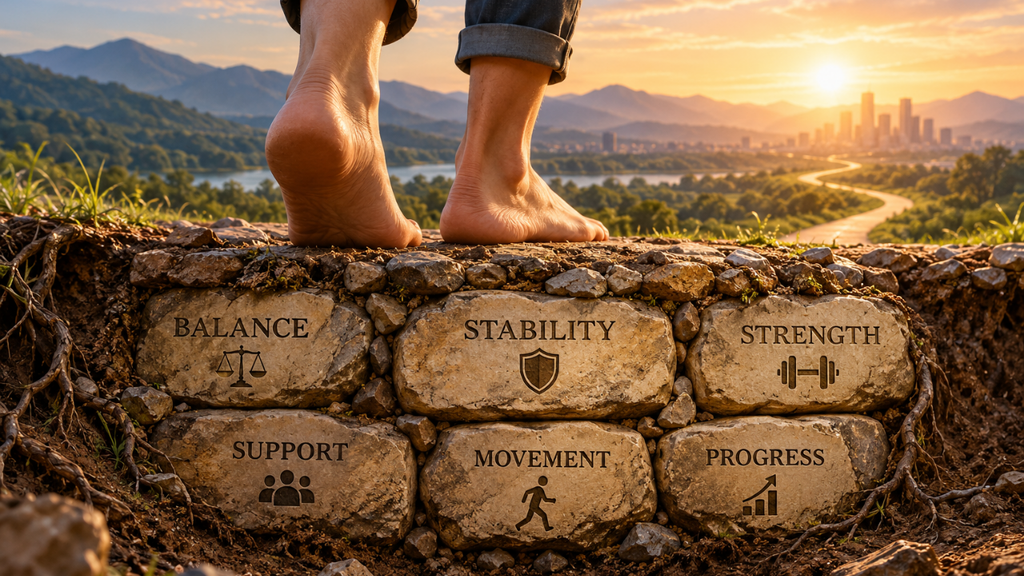
When you stand, your feet are your first point of contact with the ground. They help distribute your weight, adapt to different surfaces and provide your body with information about where you are in space.
Your feet also contain three main arches that help manage forces as you stand, walk and move. But the feet aren’t supposed to be completely rigid. They need a combination of mobility, strength and control to adapt to what you’re doing.
Balance is part of this too. Your brain constantly receives information from your eyes, inner ear, muscles and joints to help keep you upright. The sensory information coming from your feet contributes to that process.
When you step onto an uneven surface, for example, your feet and ankles respond while the rest of your body makes adjustments to keep you stable.
This is one reason maintaining foot and ankle function can become particularly important as we get older.
The Connection From Your Feet to the Rest of Your Body
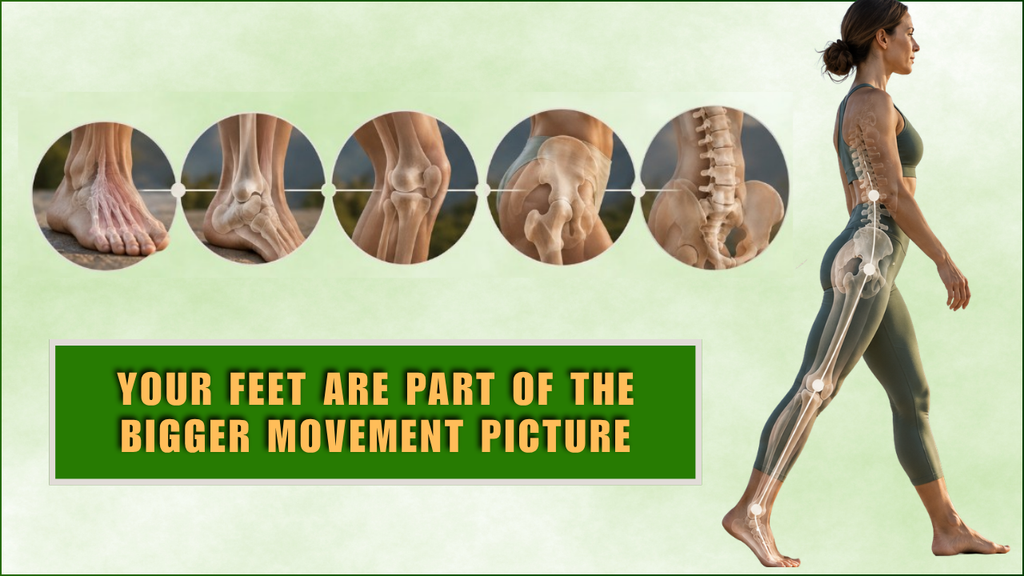
Your feet don’t work independently from the rest of you.
The foot connects to the ankle, the ankle to the knee, the knee to the hip, and from there movement continues through the pelvis and spine.
Changes in how your foot moves can influence what happens higher up the body. At the same time, the way your hips, knees and legs move can affect what happens at your feet.
This doesn’t mean that every problem with your knees, hips or back begins with your feet. The body is much more complex than that.
However, looking at the feet can give us useful information about how the whole body is moving.
You might notice that one foot takes more weight than the other, your toes grip the floor when you balance, your ankles feel stiff or one side behaves differently when you walk.
These small observations can tell us something about the way your body is currently organising movement.
How Pilates Can Improve Foot Awareness and Movement
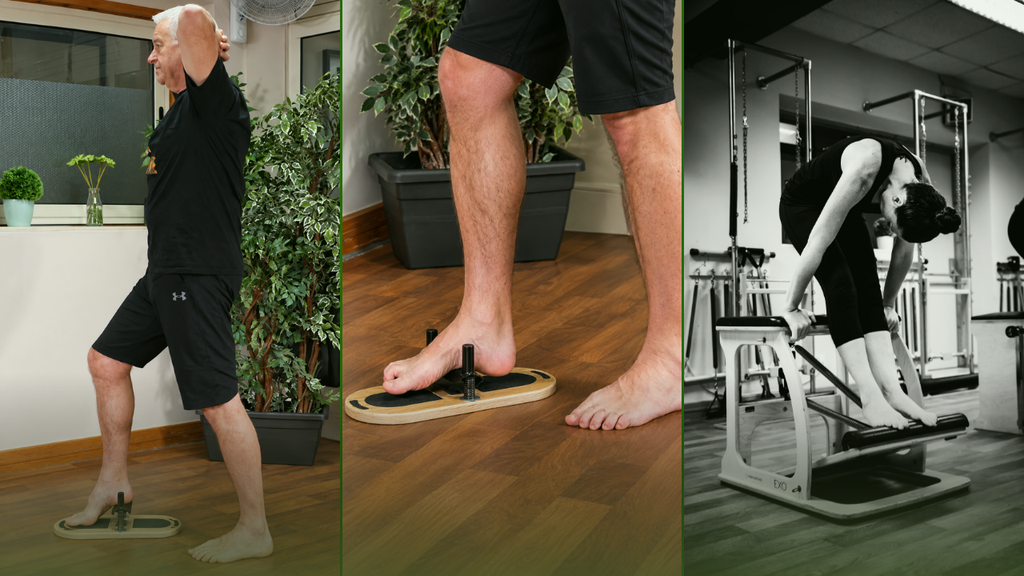
Pilates gives you an opportunity to pay attention to the feet as part of whole-body movement rather than treating them as an isolated area.
During standing exercises, for example, you can become more aware of where you place your weight and how your feet respond as the rest of your body moves.
Pilates equipment can provide even more feedback.
On the Reformer, something as simple as placing your feet on the footbar can reveal a lot. Are you pressing evenly through both feet? Are your toes gripping? Are your knees following the direction of your feet? Does one leg feel stronger or more controlled than the other?
The goal isn’t to force your feet into one “perfect” position.
Instead, Pilates can help you develop greater awareness, mobility, strength and control while also working on the legs, hips and rest of the body.
The more you understand these connections, the easier it becomes to recognise movement habits you may never have noticed before.
Conclusion
You don’t need to wait until your feet become uncomfortable to start paying attention to them.
Next time you’re standing, notice how your feet connect with the floor. Is your weight evenly distributed? Are your toes gripping? Does one side feel different?
Sometimes, simply becoming more aware of how you stand and move is a valuable place to start.
Your feet may be at the bottom of your body, but they’re an important part of the bigger movement picture.
At Pilates Centre, we look at how the whole body works together, helping you develop strength, mobility, balance, control and awareness.
Our group classes are limited to just four clients, allowing for closer observation and individual guidance.
Ready to understand your movement from the ground up?
Book your session with Pilates Centre today.
Jalón, Alicante, Spain
+34 610 30 60 05
info@pilatescentre.es

John McCallum
is an esteemed, Fully Certified Comprehensive Classical Pilates Teacher and takes immense pride as the proprietor of the distinguished Pilates Centre located in Jalon, Spain. His remarkable journey in the realm of Pilates commenced back in 2006, a pivotal juncture when he confronted the diagnosis of three slipped discs in his lower back. Pilates emerged as a beacon of profound hope and rejuvenation in his life. Instead of succumbing to the prospect of surgical intervention, Pilates gracefully assumed the role of his lifeline.
This transformative experience impelled him to make a resolute decision that would reshape his life’s trajectory. Following his journey to become a Pilates Teacher, he passionately extended the benefits he had personally garnered to those in need. This also took him to travel to other countries to continue to learn and have a fuller understanding of the method.
Fueled by an unwavering passion for Pilates, he has forged a dynamic collaboration with a reputable research institution. This strategic alliance enables him to deliver precise and illuminating insights, fostering support and empowerment for individuals interested in the power of this method. His literary contributions have garnered distinction within an array of esteeme.