Your shoulders are involved in almost everything you do throughout the day. Reaching for something on a shelf, getting dressed, carrying shopping bags, lifting your arms or pushing yourself up from a chair all require coordinated movement around the shoulder area.
But there’s an important part of this movement that often gets overlooked: your shoulder blades.
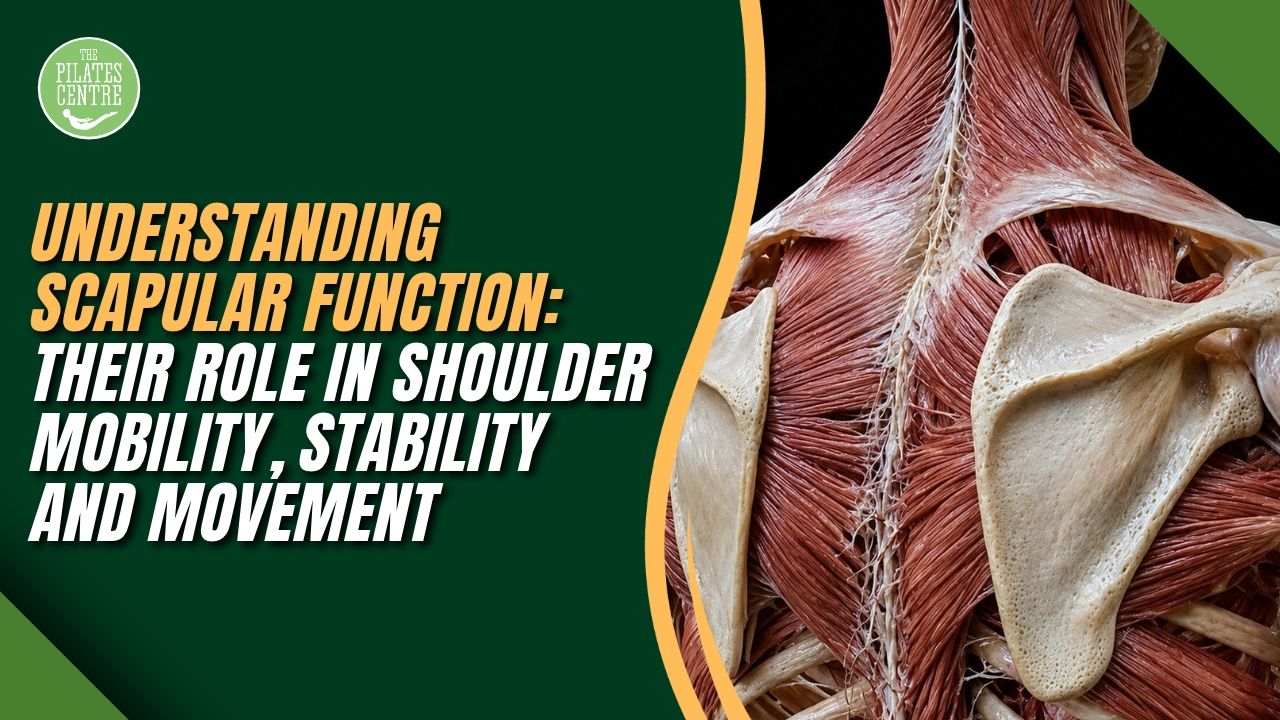
Also known as the scapulae, the shoulder blades play a central role in how your arms move and how your shoulders remain stable. They are not simply bones sitting at the back of your body. They move, rotate and work with several muscles to support the shoulder joint.
can help us appreciate why balanced shoulder movement, upper-body strength and mobility are important at every age.
1. What Are the Shoulder Blades and What Do They Do?
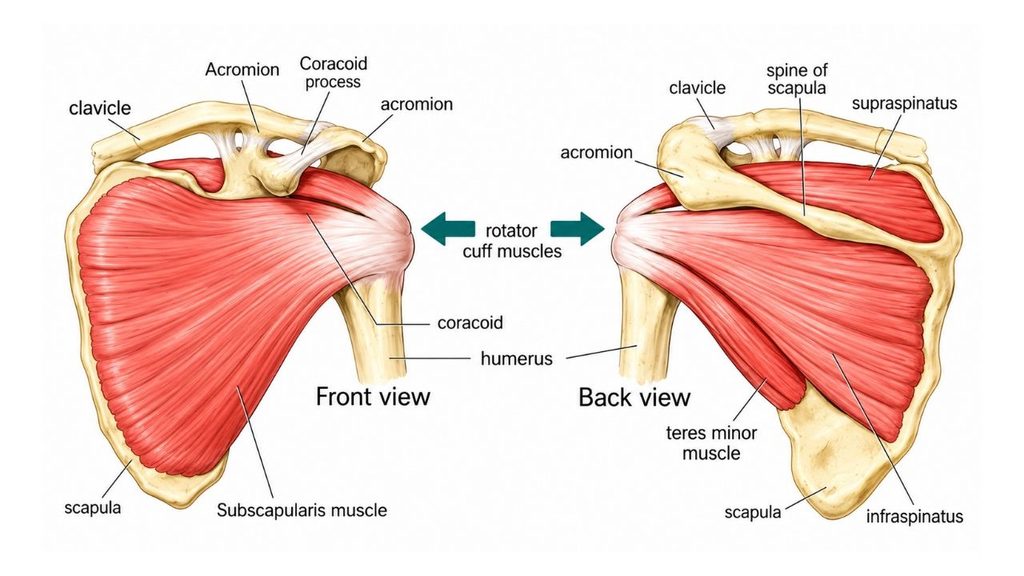
The shoulder blades are two flat, triangular-shaped bones located on the upper back, one on each side of the spine. Each one connects with the collarbone and forms part of the shoulder joint, where the upper arm bone (humerus) meets the socket of the scapula.
Unlike the hip joint, which is supported by a deep socket, the shoulder joint allows a much wider range of movement. This gives your arms considerable freedom, but it also means the surrounding muscles play an important role in maintaining control and stability.
The shoulder blades provide a moving foundation for the arms. They help position the shoulder joint, support muscle activity and allow the arms to move efficiently.
Several muscles contribute to this function, including:
- Trapezius: Helps move and position the shoulder blades, including during arm elevation.
- Serratus anterior: Helps hold the shoulder blades against the ribcage and supports their upward rotation.
- Rhomboids: Help control the shoulder blades and draw them towards the spine.
- Levator scapulae: Assists with elevating the shoulder blades.
These muscles work together rather than independently. Their coordination allows the shoulder blades to remain controlled while still moving freely.
2. What Happens When Shoulder Blade Movement Is Limited?
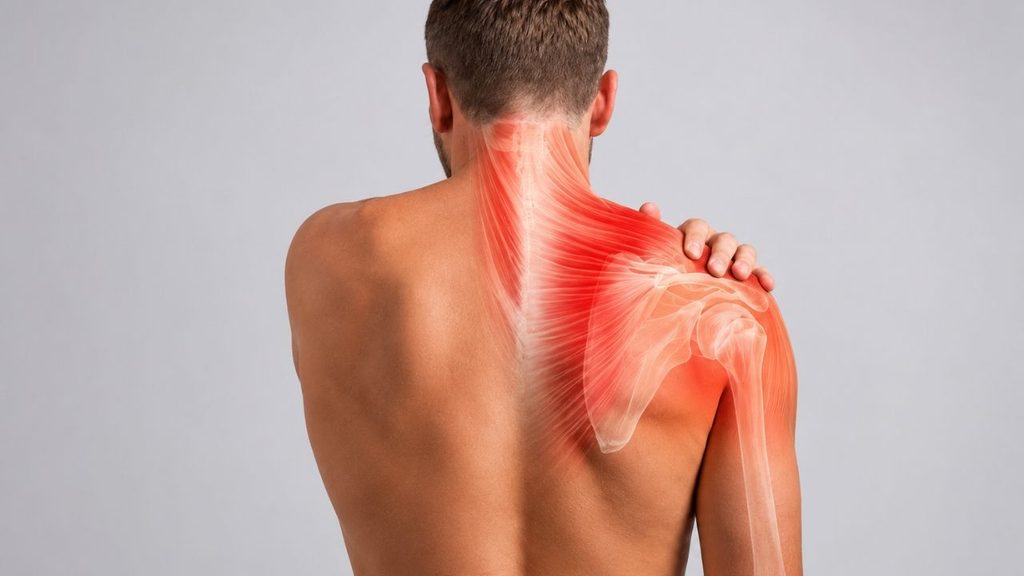
The shoulder blades depend on coordinated muscle activity to move and remain stable. Changes in muscle strength, mobility, motor control or the way the shoulder moves can affect this coordination.
An alteration in shoulder blade movement is often described as scapular dyskinesis. This term describes changes in the position or movement of the scapula during arm activity.
It is not a diagnosis on its own, and it does not automatically mean someone has an injury. However, altered shoulder blade movement can be associated with certain shoulder conditions and may affect how efficiently the shoulder works.
You might notice that:
- Reaching overhead feels restricted.
- Your shoulders become tired during repeated arm movements.
- One shoulder blade appears to move differently from the other.
- You find it difficult to control your arms during certain activities.
- Your upper back and shoulder area feel stiff or uncomfortable.
These signs can have several possible explanations. Shoulder discomfort is not always caused by the shoulder blades, and changes in scapular movement do not necessarily cause pain.
What Does Research Tell Us?
A 2019 review published in SICOT-J, titled Scapular Dyskinesia, the Forgotten Culprit of Shoulder Pain and How to Rehabilitate, highlights the importance of coordinated scapular muscle activity in normal shoulder function.
The research discusses how altered shoulder blade movement, known as scapular dyskinesis, may contribute to shoulder pain and dysfunction. It also emphasises the importance of understanding scapular mechanics when assessing and addressing shoulder-related problems.
3. How Pilates Can Support Better Shoulder Movement
Pilates places importance on controlled movement, body awareness, strength and coordination. These principles can help develop a better understanding of how the shoulder blades work with the arms, ribcage and spine.
Rather than simply asking you to hold your shoulders in one position, Pilates encourages controlled movement while maintaining appropriate support.
Depending on the exercise and individual needs, Pilates can help develop shoulder blade awareness by teaching individuals to recogniezhow their shoulder blades move against the ribcage, improving their understanding of shoulder positioning and control. Exercises can also challenge the muscles responsible for supporting and moving the shoulder blades, including the serratus anterior and trapezius, helping to develop upper-body strength. Working on thoracic mobility is another important aspect, as the upper back and ribcage contribute to comfortable arm movement and coordination when reaching or lifting. Through carefully selected exercises, Pilates encourages the arms, shoulders, spine and trunk to work together, developing better movement coordination for everyday activities.
At Pilates Centre, exercises are selected and adapted according to each individual’s movement ability, experience and needs. The aim is to develop strength, control and mobility through considered movement, rather than forcing the body into a particular position.
Conclusion
Your shoulder blades play an important role in everyday movement. They provide a foundation for your arms, help maintain shoulder stability and move in coordination with the upper back and ribcage.
Healthy shoulder movement is not about keeping your shoulder blades still or constantly pulling them backwards. It is about having the strength and control to let them move when needed.
Through regular, appropriate movement and Pilates practice, you can develop greater awareness of how your shoulders work and support the movements you rely on every day.
Give your shoulders the attention they deserve.
At Pilates Centre in Jalón, Alicante, we focus on helping you move with greater awareness, strength and control through the complete Pilates system.
To find out more or arrange a session:
Website: www.pilatescentre.es
Phone: +34 610 30 60 05
Email: info@pilatescentre.es
Location: Jalón, Alicante, Spain

John McCallum
is an esteemed, Fully Certified Comprehensive Classical Pilates Teacher and takes immense pride as the proprietor of the distinguished Pilates Centre located in Jalon, Spain. His remarkable journey in the realm of Pilates commenced back in 2006, a pivotal juncture when he confronted the diagnosis of three slipped discs in his lower back. Pilates emerged as a beacon of profound hope and rejuvenation in his life. Instead of succumbing to the prospect of surgical intervention, Pilates gracefully assumed the role of his lifeline.
This transformative experience impelled him to make a resolute decision that would reshape his life’s trajectory. Following his journey to become a Pilates Teacher, he passionately extended the benefits he had personally garnered to those in need. This also took him to travel to other countries to continue to learn and have a fuller understanding of the method.
Fueled by an unwavering passion for Pilates, he has forged a dynamic collaboration with a reputable research institution. This strategic alliance enables him to deliver precise and illuminating insights, fostering support and empowerment for individuals interested in the power of this method. His literary contributions have garnered distinction within an array of esteeme.