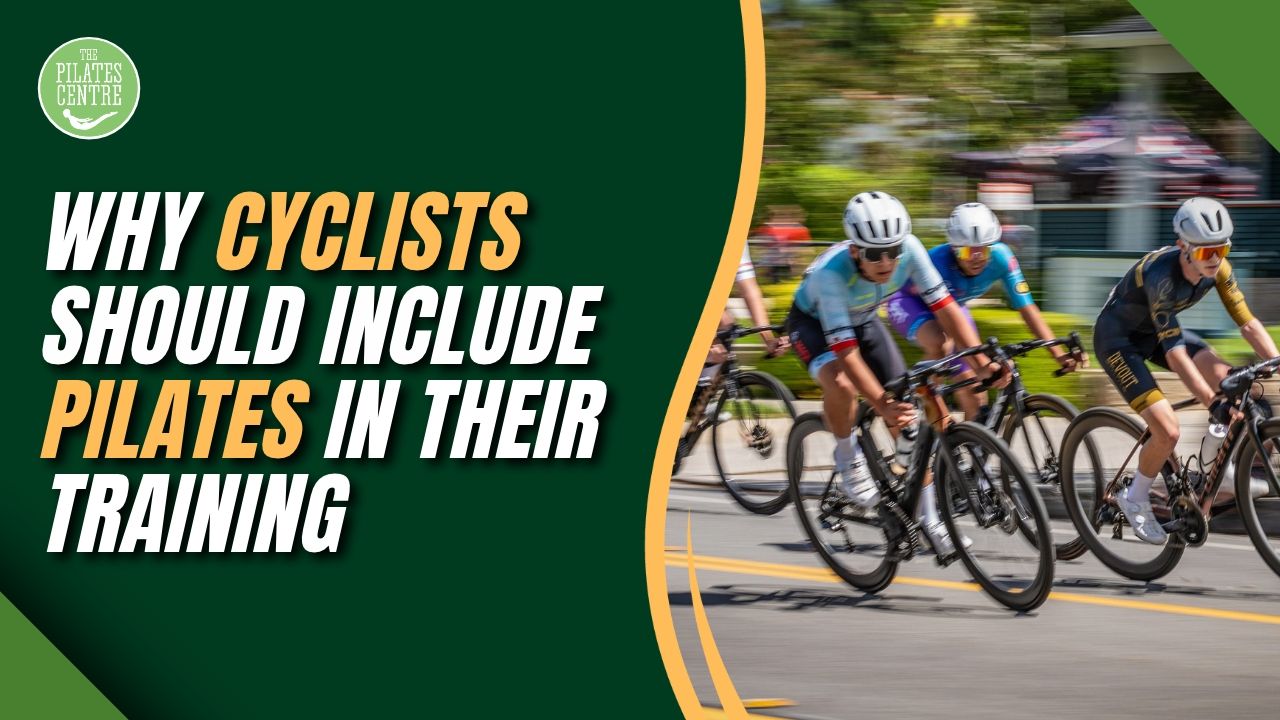
Cycling is an excellent way to build cardiovascular fitness, strengthen the legs and improve endurance. But spending hours on a bicycle also places repeated demands on the body. Your hips remain in a flexed position, your upper body needs to support a forward-leaning posture, and your core works continuously to help maintain control.
This is where Pilates for cyclists can make a valuable difference. By focusing on strength, mobility, balance and body awareness, Pilates can complement regular cycling training and help address some of the physical demands of spending long periods on a bike.
Whether you cycle for fitness, enjoy weekend rides or train for longer distances, adding Pilates to your routine can help you develop a more balanced approach to movement.
1. Build Core Strength and Better Stability
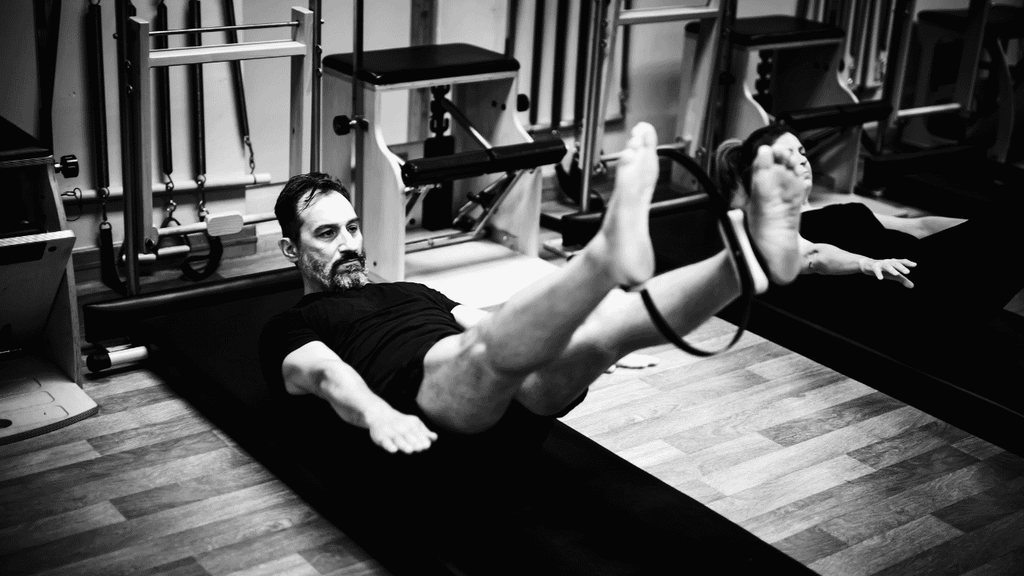
When cycling, your legs do most of the visible work, but your core muscles are also constantly involved. The abdominal muscles, back muscles and deeper stabilizing muscles help support your trunk while your legs move repeatedly.
A well-conditioned core helps you maintain control of your body position, particularly during longer rides when fatigue can affect your posture.
Pilates includes exercises that challenge the abdominal muscles, back and pelvis to work together. The focus is not simply on performing more repetitions, but on developing controlled movement and maintaining stability while different parts of the body move.
This can be particularly useful for cyclists who want to improve their overall body control and build strength beyond the muscles used to pedal.
2. Improve Hip Mobility and Flexibility
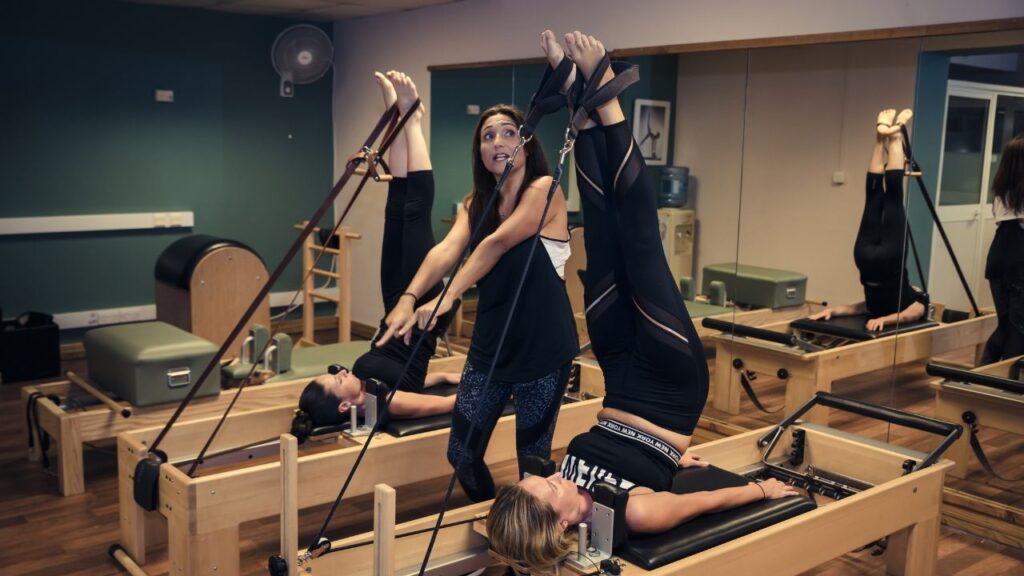
Cycling involves repeated hip flexion as you move your legs through the pedal cycle. Spending long periods in this position can contribute to feelings of tightness or reduced comfort around the hips, particularly when combined with sitting during the rest of the day.
The hip flexors, gluteal muscles and surrounding structures all contribute to hip movement and control.
Pilates incorporates exercises that move the hips through different ranges while developing strength and control. This helps cyclists work on areas that may receive less varied movement during cycling.
Improving hip mobility can also support everyday activities such as walking, climbing stairs and getting up from a seated position.
Research supports the benefits of Pilates for flexibility and pelvic stability. A 2011 randomised controlled study by Phrompaet et al., published in the Asian Journal of Sports Medicine, found that participants who completed 45-minute Pilates sessions twice a week for eight weeks showed significant improvements in flexibility and lumbo-pelvic stability compared with the control group. These findings highlight how Pilates can help develop better movement control and flexibility, which may be beneficial for cyclists who spend extended periods in a repetitive riding position. By incorporating Pilates into their training routine, cyclists can work on hip mobility, pelvic control and strength to support more comfortable movement both on and off the bike.
Read the full research article
3. Strengthen the Upper Body and Support Posture
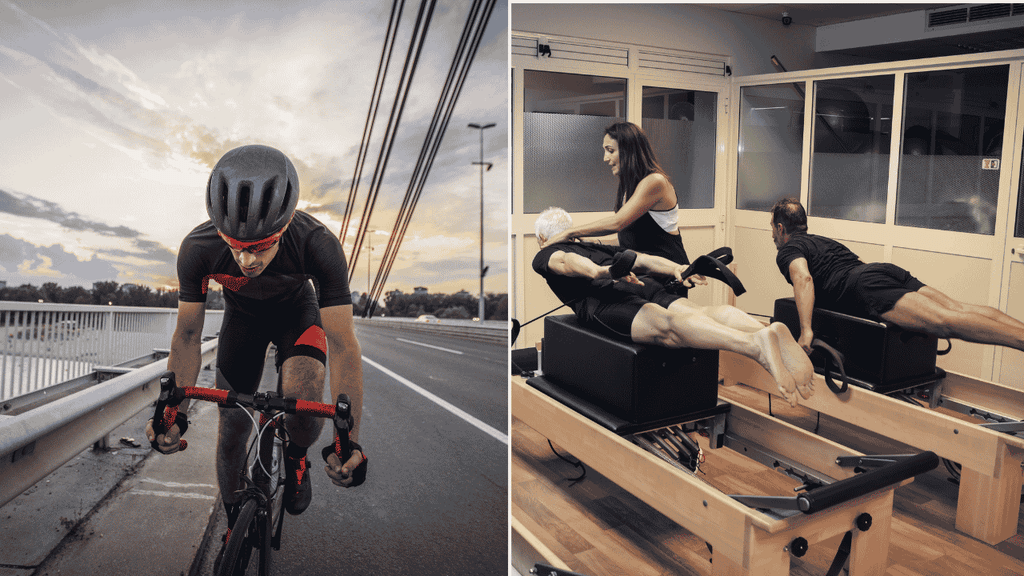
Cycling posture places the upper body in a forward-leaning position, with the hands supporting part of the body’s weight. The shoulders, arms, upper back and neck all contribute to maintaining this position.
Over longer distances, remaining in the same posture can lead to muscular fatigue or discomfort.
Pilates provides an opportunity to work on upper-body strength, shoulder mobility and thoracic spine movement. Exercises involving the arms, shoulder blades and upper back can help develop better awareness and control of these areas.
The aim is not to force the shoulders into a particular position, but to build the strength and mobility needed to move comfortably and maintain control.
4. Support a More Balanced Training Routine
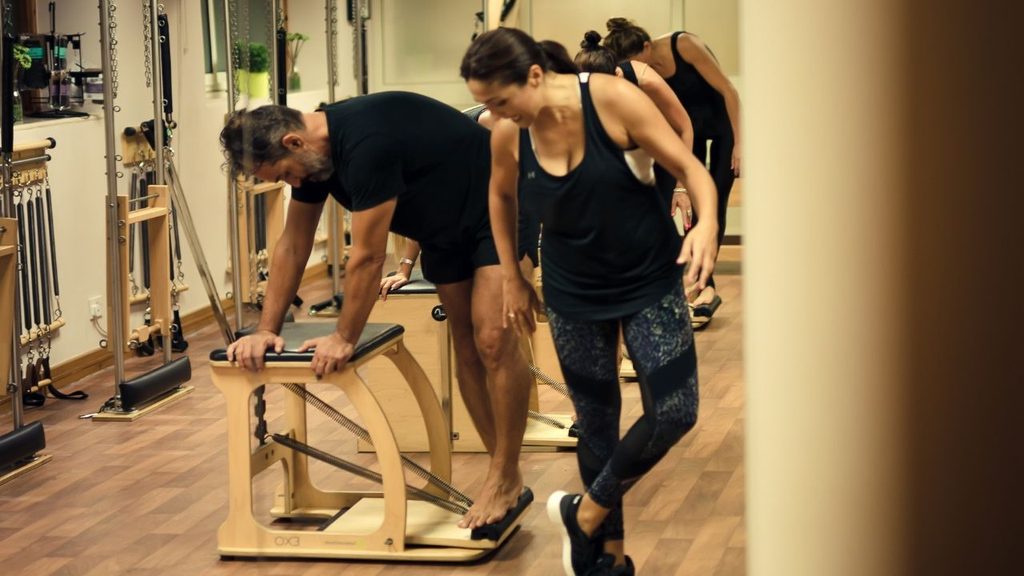
Cycling is a repetitive activity. The same movement pattern is performed thousands of times during a ride, placing specific demands on the muscles and joints.
Pilates introduces different movement patterns, allowing you to work on areas that may receive less attention during cycling. It can complement your riding routine by providing opportunities to develop strength, mobility, coordination and control.
You do not need to spend hours practicing Pilates to make it part of your training. Even one or two appropriately planned sessions each week can provide a useful addition to your overall exercise routine.
The exercises should be adapted to your cycling schedule, experience and individual needs. Allowing time for recovery is also important, particularly during periods of intensive cycling training.
Conclusion
Cycling and Pilates can work well together because they place different demands on the body. Cycling develops endurance and cardiovascular fitness, while Pilates offers a structured way to work on strength, mobility, balance and movement control.
By including Pilates in your training, you can give your body more variety and pay attention to areas that may be overlooked when most of your exercise time is spent on the bike.
You do not have to be a competitive cyclist to benefit. If you enjoy cycling regularly, Pilates can be a valuable addition to a well-rounded approach to staying active.
Give your body more than just miles. Build strength, improve mobility and move with greater control.
Bring Pilates Into Your Cycling Routine
At Pilates Centre in Jalón, Alicante, we offer a complete Pilates system designed to support strength, mobility, coordination and better movement. Our sessions can be adapted to your individual needs, experience and activity level.
If cycling is part of your lifestyle, discover how Pilates can complement your training.
Get in touch to find out more or arrange your session
www.pilatescentre.es
Phone: +34 610 30 60 05
Email: info@pilatescentre.es
Location: Jalón, Alicante, Spain

John McCallum
is an esteemed, Fully Certified Comprehensive Classical Pilates Teacher and takes immense pride as the proprietor of the distinguished Pilates Centre located in Jalon, Spain. His remarkable journey in the realm of Pilates commenced back in 2006, a pivotal juncture when he confronted the diagnosis of three slipped discs in his lower back. Pilates emerged as a beacon of profound hope and rejuvenation in his life. Instead of succumbing to the prospect of surgical intervention, Pilates gracefully assumed the role of his lifeline.
This transformative experience impelled him to make a resolute decision that would reshape his life’s trajectory. Following his journey to become a Pilates Teacher, he passionately extended the benefits he had personally garnered to those in need. This also took him to travel to other countries to continue to learn and have a fuller understanding of the method.
Fueled by an unwavering passion for Pilates, he has forged a dynamic collaboration with a reputable research institution. This strategic alliance enables him to deliver precise and illuminating insights, fostering support and empowerment for individuals interested in the power of this method. His literary contributions have garnered distinction within an array of esteeme.