Have you ever noticed how some movements that once felt easy can become more challenging over time?
Perhaps getting up from the floor takes a little more effort, your joints feel stiffer after sitting for too long, or you find yourself being more cautious when climbing stairs.
It’s easy to assume these changes are simply part of getting older. While ageing naturally brings changes to our muscles, joints and other body systems, our bodies are also remarkably capable of adapting.
Whether you’re in your 30s, 50s, 70s or beyond, movement continues to play an important role in maintaining strength, mobility, balance and independence.
The important thing isn’t to move exactly as you did years ago. It’s to understand what your body needs today and give it opportunities to keep moving well.
1. Your Body Changes With Age, but It Can Still Adapt
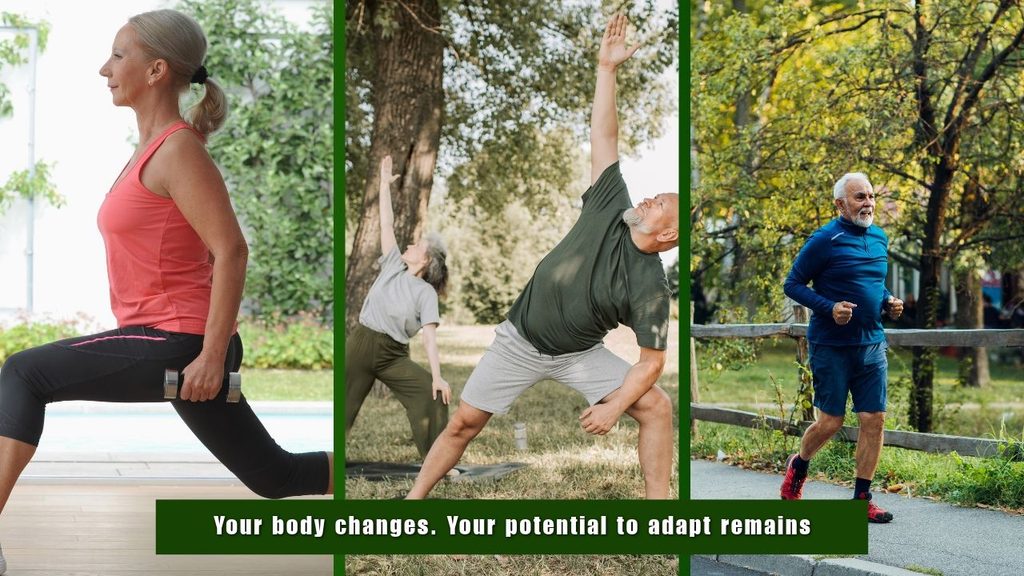
Our bodies are constantly responding to what we do.
When we regularly use our muscles, challenge our balance and move our joints through different ranges of motion, our bodies receive signals to maintain or develop those abilities.
This ability to respond to physical demands is known as adaptation.
For example, muscles can become stronger when they are challenged with appropriate resistance. Balance can improve with practice, and regular movement can help maintain joint mobility and coordination.
As we age, changes in muscle mass, bone density, flexibility and reaction time may affect how we move. However, these changes don’t happen at the same rate for everyone.
Someone in their 70s who has remained physically active may have very different movement abilities from someone much younger who spends most of the day sitting.
Age alone doesn’t determine what your body can do.
Your activity level, health, previous injuries, movement habits and individual circumstances all influence how your body responds.
This is why it is important not to assume that getting older automatically means becoming weaker or less capable.
Although some age-related changes cannot be completely prevented, regular physical activity can help maintain function and support a better quality of life.
2. Why Movement Matters More Than You Think
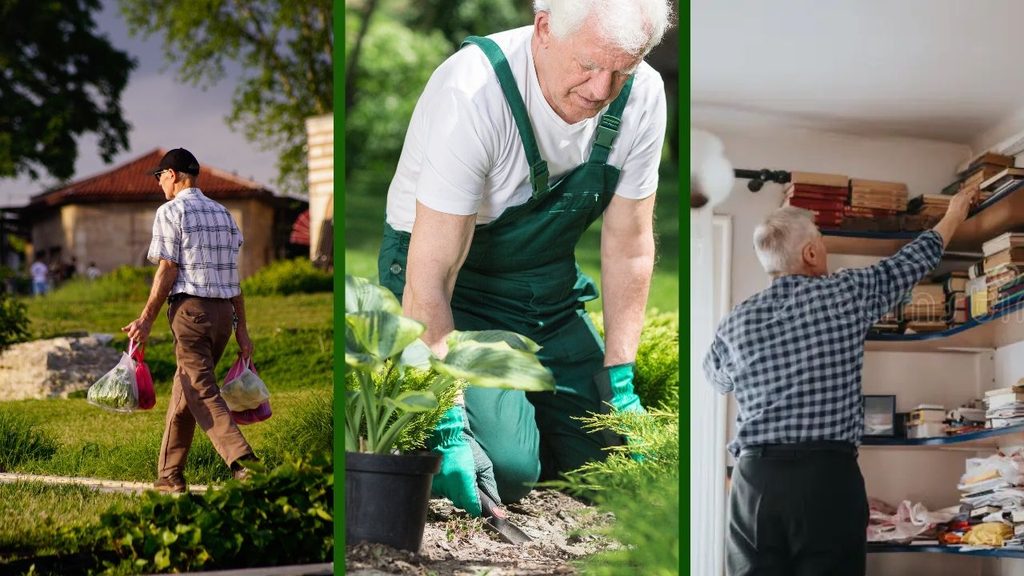
Movement is part of everyday life. Walking, carrying groceries, gardening or reaching a book all rely on strength, mobility, balance and coordination.
These abilities work together, and movements we rarely use can gradually become more difficult. A mix of strengthening exercises, mobility work and balance practice helps support the activities we depend on.
It’s never too late to begin. Progress looks different for everyone, but moving with greater ease and confidence remains a worthwhile goal at any age.
3. How Pilates Helps You Keep Moving at Every Age
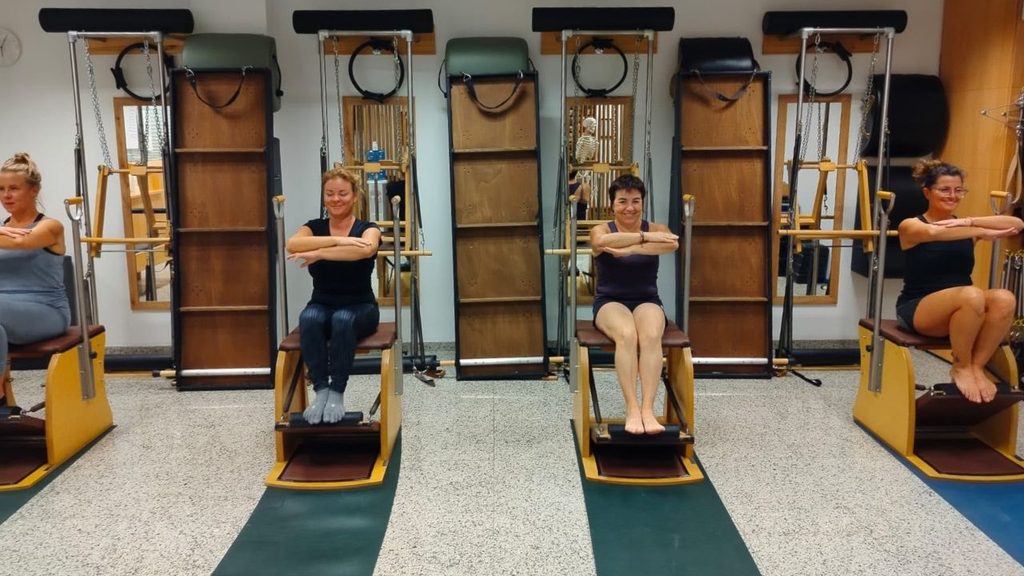
Pilates exercises can be adapted to suit different bodies, abilities and movement goals, offering an appropriate balance of support and challenge.
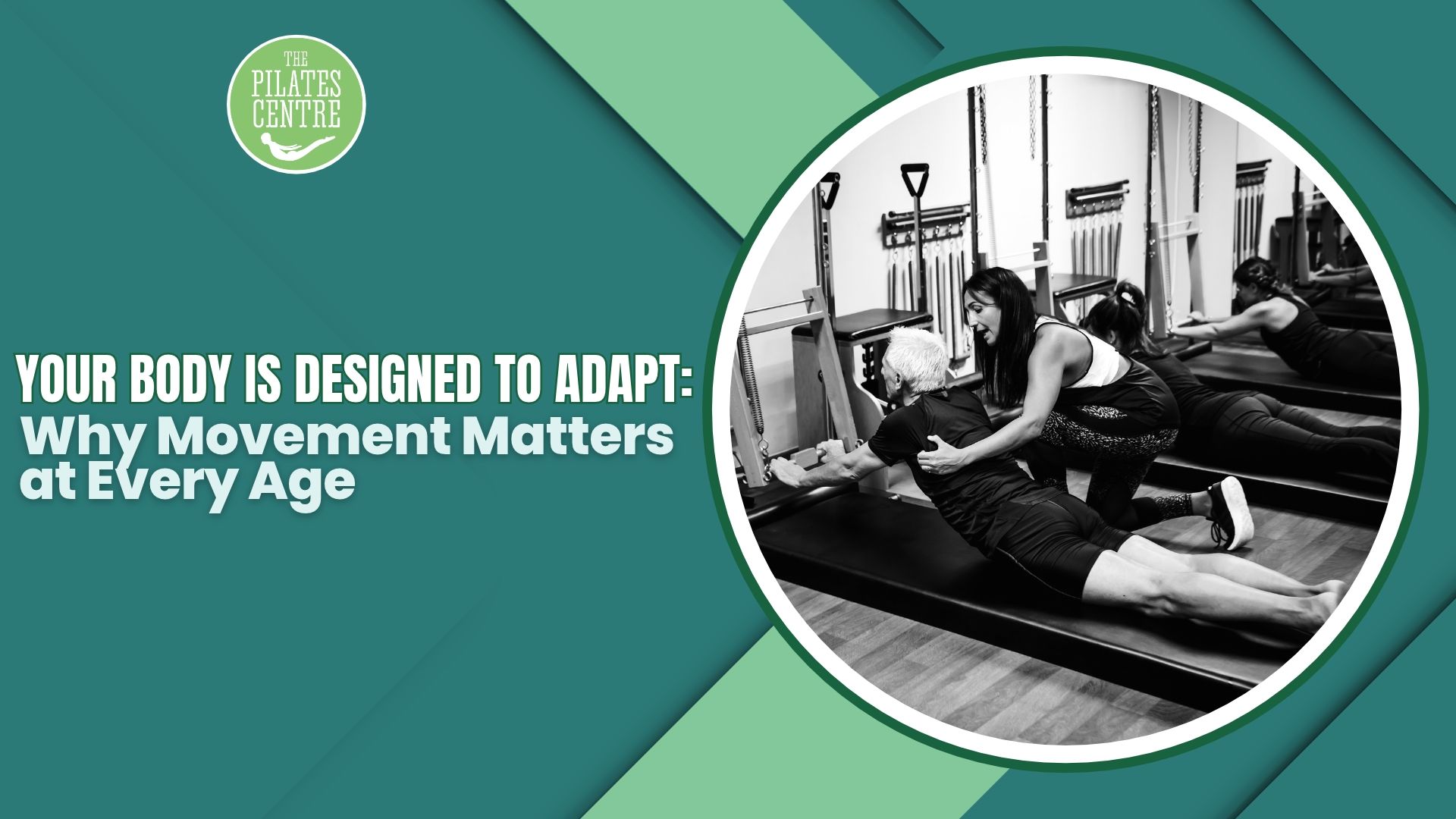
At Pilates Centre, we teach the complete classical Pilates system, using the Mat, Reformer, Cadillac, Chairs, Barrels and smaller apparatus to develop strength, mobility, coordination and control.
We choose exercises based on your individual needs, helping you build confidence and understand how your body works together.
With consistent practice, everyday activities may feel easier and more coordinated. Progress isn’t always about doing harder exercises. It can mean moving with greater ease and confidence at any age.
Conclusion
Your body changes throughout life, but it’s never too late to support how you move. Stay active, work within your abilities and build gradually.
Movement today supports what you want to keep doing tomorrow.
At Pilates Centre, our private sessions and small group classes, with a maximum of four clients, offer individual attention to help you keep moving well.
Contact us to find the right session for you.
Pilates Centre | Jalón, Alicante, Spain
+34 610 30 60 05
info@pilatescentre.es

John McCallum
is an esteemed, Fully Certified Comprehensive Classical Pilates Teacher and takes immense pride as the proprietor of the distinguished Pilates Centre located in Jalon, Spain. His remarkable journey in the realm of Pilates commenced back in 2006, a pivotal juncture when he confronted the diagnosis of three slipped discs in his lower back. Pilates emerged as a beacon of profound hope and rejuvenation in his life. Instead of succumbing to the prospect of surgical intervention, Pilates gracefully assumed the role of his lifeline.
This transformative experience impelled him to make a resolute decision that would reshape his life’s trajectory. Following his journey to become a Pilates Teacher, he passionately extended the benefits he had personally garnered to those in need. This also took him to travel to other countries to continue to learn and have a fuller understanding of the method.
Fueled by an unwavering passion for Pilates, he has forged a dynamic collaboration with a reputable research institution. This strategic alliance enables him to deliver precise and illuminating insights, fostering support and empowerment for individuals interested in the power of this method. His literary contributions have garnered distinction within an array of esteeme.