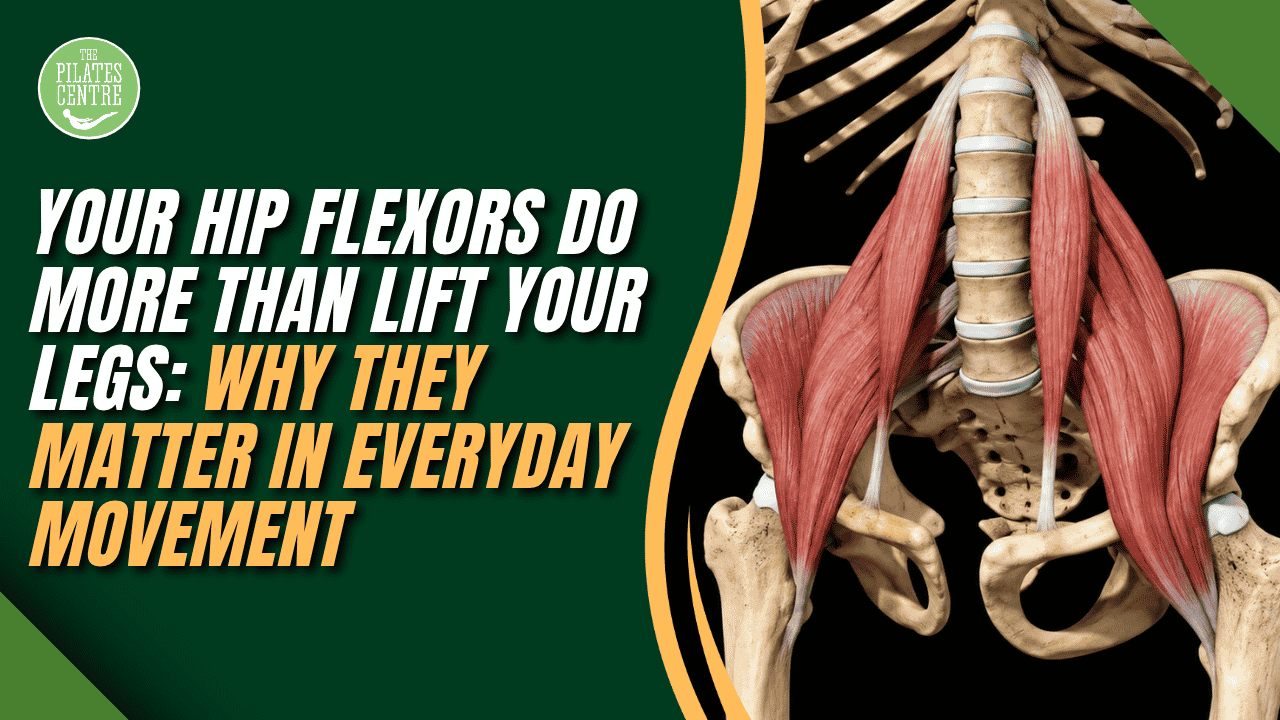
Have you ever thought about what happens when you take a step, climb the stairs or lift your knee to put on your shoes?
These movements may seem simple, but they involve several muscles working together, including a group that often gets overlooked: your hip flexors.
We tend to hear about hip flexors when someone complains about tight hips or stiffness after sitting for too long. But these muscles do much more than become tight. They play an important role in walking, maintaining movement control and helping your legs work with the rest of your body.
Understanding how they work can help you appreciate why keeping your hips strong and mobile matters at every age.
1. What Are Your Hip Flexors and What Do They Actually Do?
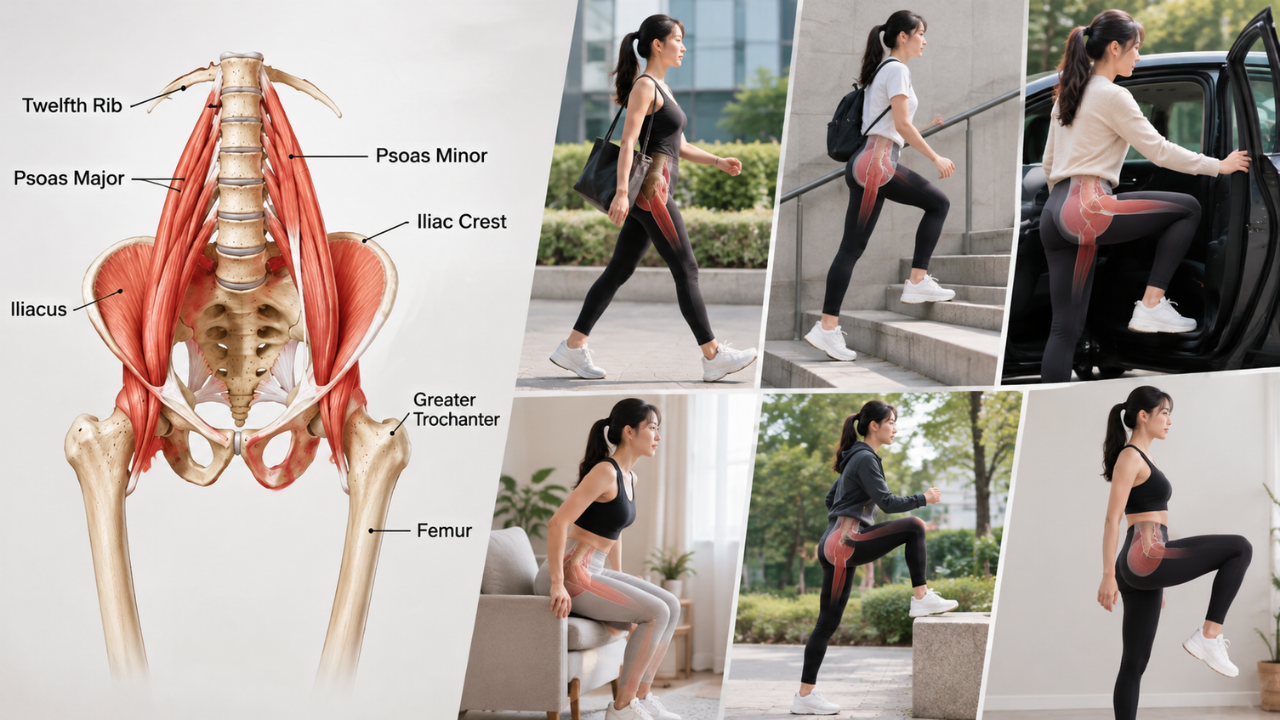
Your hip flexors are a group of muscles located at the front of your hips that help bring your thigh towards your torso or your torso towards your thigh. One of the most important is the iliopsoas, which consists of the psoas major, connecting the lumbar spine to the thigh bone, and the iliacus, which runs from the pelvis to the thigh bone. Other muscles, including the rectus femoris and sartorius, also contribute to hip flexion.
These muscles play an important role in everyday activities such as walking, climbing stairs, getting into a car, and stepping over obstacles. Because some hip flexors connect to the pelvis and lower back, they can also influence how these areas move and are positioned. However, they don’t work alone. They coordinate with the abdominal muscles, glutes, hamstrings, and other muscles around the hips to support controlled, efficient movement throughout the body.
2. Why Hip Strength and Mobility Matter for Everyday Life
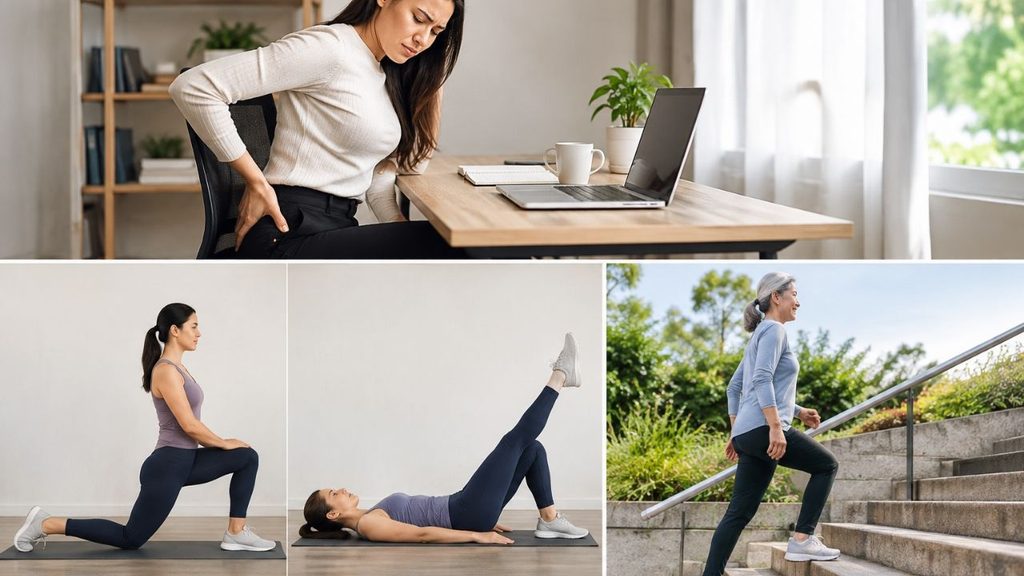
Many people associate hip flexors with tightness, especially after sitting for long periods. However, feeling tight doesn’t always mean a muscle is physically shortened. This sensation may be related to muscle fatigue, limited movement, sensitivity, or how the body responds to certain positions. That’s why stretching isn’t always the only answer. Your hips need both mobility and strength to support everyday activities such as stepping onto a pavement, getting out of a chair, walking uphill, lifting your legs, and climbing stairs.
As we age, maintaining strength and coordination around the hips becomes increasingly important for mobility and independence. Reduced strength or movement confidence may make certain activities more challenging, but regular, appropriately challenging exercise can help maintain muscle function and improve movement control. It’s also important to remember that the hips are part of a connected movement system, where the pelvis, spine, knees, and ankles influence how the body moves. Rather than focusing only on stretching or strengthening one muscle, it’s more useful to consider how the whole body works together.
3. How Pilates Can Help Your Hip Flexors Work Better
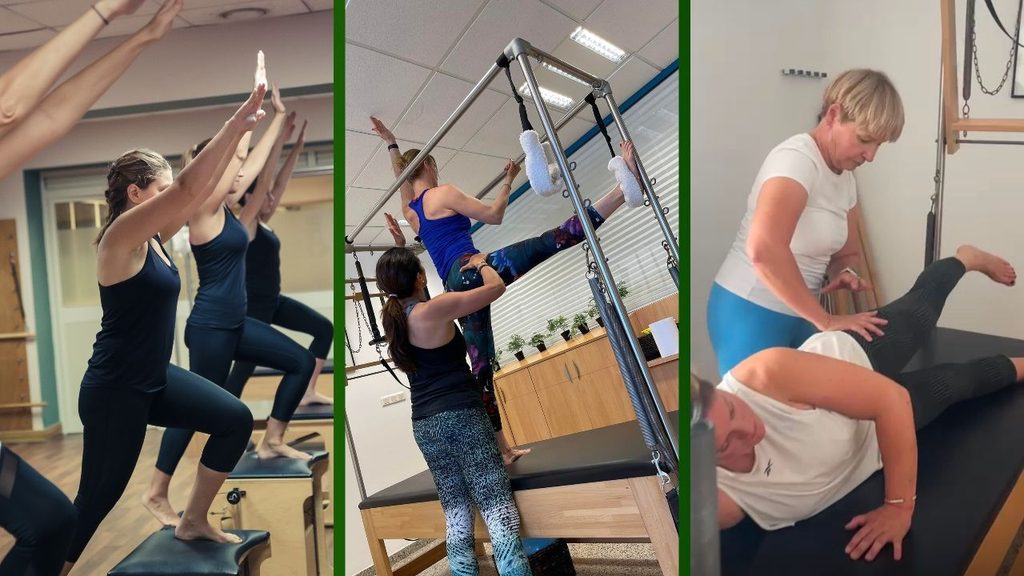
Pilates offers opportunities to develop hip strength, mobility and coordination through controlled movements on the Mat and apparatus. These exercises challenge the hip flexors in different ways while involving the abdominal muscles, glutes and muscles that support the pelvis. For example, lifting one leg while keeping the pelvis stable requires coordination between the hip flexors and surrounding muscles. On the Reformer, spring resistance allows you to explore how your hips move, while exercises that involve hip extension help you work in the opposite direction rather than focusing only on hip flexion.
The goal isn’t simply to make your hip flexors stronger or more flexible, but to help them work effectively with the rest of your body. During Pilates, you may notice that one hip moves more easily than the other, your pelvis shifts when you lift a leg or you hold unnecessary tension in your lower back. These observations provide useful information about your movement patterns, helping a qualified Pilates teacher select appropriate exercises and adjust the level of challenge. Good movement isn’t about isolating one muscle. It’s about understanding how different parts of your body work together.
Conclusion
Your hip flexors may not be the first muscles you think about when it comes to exercise, but they contribute to many of the movements you rely on every day.
From walking and climbing stairs to lifting your legs and maintaining control through your pelvis, these muscles have an important job.
Giving your hips opportunities to develop strength, mobility and coordination can help support comfortable, confident movement throughout life.
Our sessions are designed to support your movement goals, regardless of your age or previous Pilates experience.
Ready to give your hips the attention they deserve?
Book a session with Pilates Centre and discover how Pilates can help you move with greater confidence and control.
Pilates Centre | Jalón, Alicante, Spain
+34 610 30 60 05
info@pilatescentre.es

John McCallum
is an esteemed, Fully Certified Comprehensive Classical Pilates Teacher and takes immense pride as the proprietor of the distinguished Pilates Centre located in Jalon, Spain. His remarkable journey in the realm of Pilates commenced back in 2006, a pivotal juncture when he confronted the diagnosis of three slipped discs in his lower back. Pilates emerged as a beacon of profound hope and rejuvenation in his life. Instead of succumbing to the prospect of surgical intervention, Pilates gracefully assumed the role of his lifeline.
This transformative experience impelled him to make a resolute decision that would reshape his life’s trajectory. Following his journey to become a Pilates Teacher, he passionately extended the benefits he had personally garnered to those in need. This also took him to travel to other countries to continue to learn and have a fuller understanding of the method.
Fueled by an unwavering passion for Pilates, he has forged a dynamic collaboration with a reputable research institution. This strategic alliance enables him to deliver precise and illuminating insights, fostering support and empowerment for individuals interested in the power of this method. His literary contributions have garnered distinction within an array of esteeme.