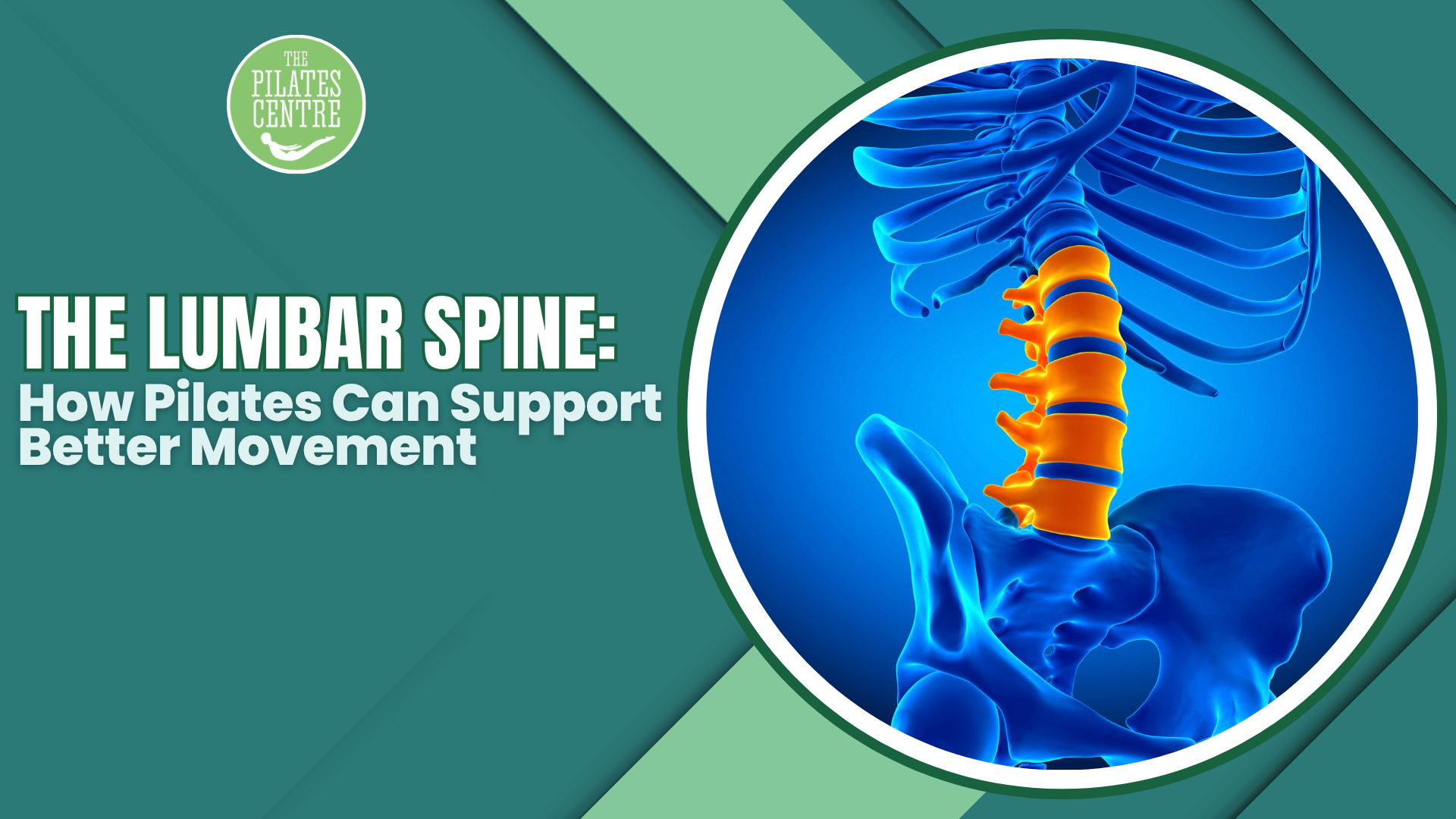
Your lower back works hard every day.
It helps you bend, walk, sit, stand, lift, turn and move through everyday activities. Because it is involved in so much of what we do, it can also become an area where stiffness, weakness or discomfort is often felt.
Understanding the lumbar spine can help us understand why good movement matters and how Pilates can support it.
What Is the Lumbar Spine?
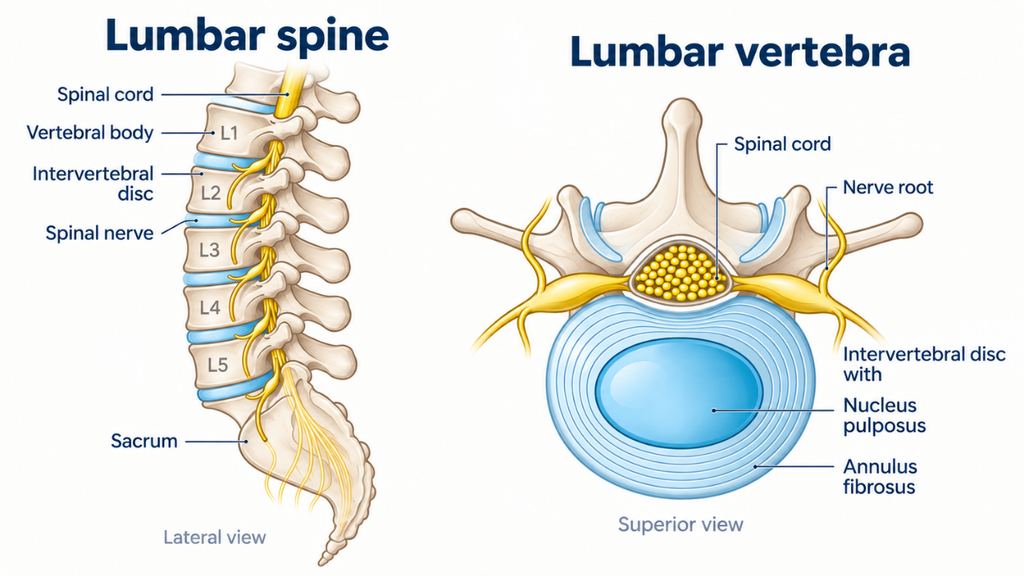
The lumbar spine is the lower section of your spine. It consists of five vertebrae, known as L1 to L5, located between the thoracic spine and the pelvis.
These vertebrae are larger than those higher up in the spine because they carry a significant amount of the body’s weight.
The lumbar spine also works closely with the pelvis, hips and surrounding muscles. It isn’t working on its own. Every time you move, several areas of the body need to coordinate with each other.
Why Does Lumbar Movement Matter?
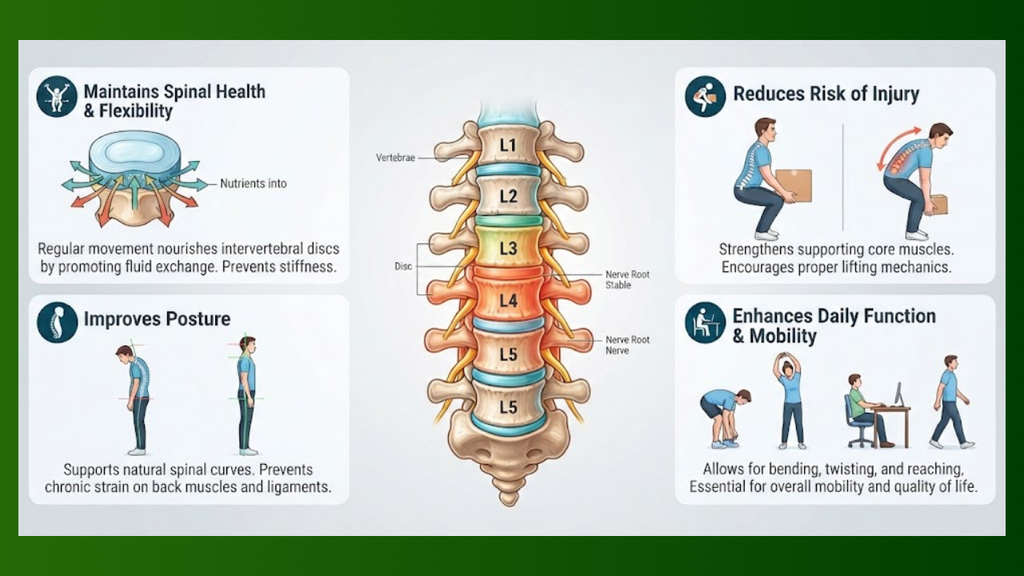
The lower back needs a balance of mobility and stability.
Too little movement can leave the area feeling stiff. At the same time, movement that is poorly controlled or repeatedly overloaded can place unnecessary stress on the structures around the spine.
This is why Pilates isn’t simply about strengthening the back or keeping the spine perfectly still.
It is about learning how to move with greater awareness and control.
How Can Pilates Support the Lumbar Spine?
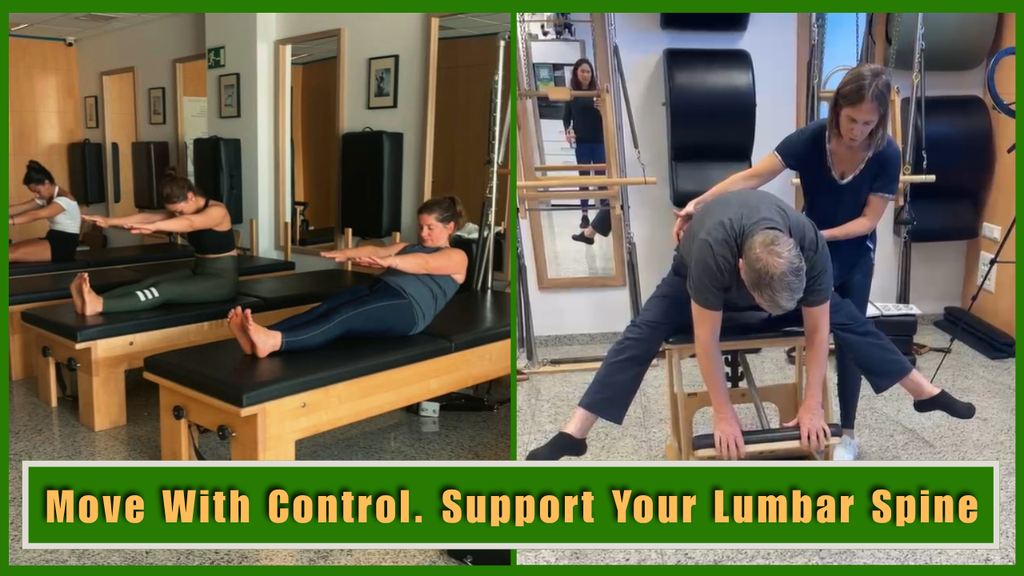
Pilates uses controlled movements to improve awareness of how the spine, pelvis and limbs work together. Strengthening the muscles around the trunk, hips and pelvis can support better control and stability through the lumbar spine. It also encourages awareness of posture, breathing and movement, helping you recognise tension, limited mobility or poor coordination.
The lumbar spine is part of a larger movement system involving the hips, pelvis, ribcage and shoulders. Pilates explores different spinal movements while developing coordination between these areas. These skills can support everyday activities such as walking, bending, reaching and lifting, helping you move with greater control and confidence.
Conclusion
One of the most important things to remember is that the lumbar spine is part of a connected body.
Your hips, pelvis, abdominal muscles, back muscles, ribcage and legs all contribute to how you move.
Instead of asking, “How do I strengthen my lower back?” it can be more useful to ask:
“How can my whole body work better together?”
That is where thoughtful Pilates practice can make a difference.
Ready to move better?
Visit www.pilatescentre.es or contact us at +34 610 30 60 05 to learn more about our Pilates sessions in Jalón, Alicante.

John McCallum
is an esteemed, Fully Certified Comprehensive Classical Pilates Teacher and takes immense pride as the proprietor of the distinguished Pilates Centre located in Jalon, Spain. His remarkable journey in the realm of Pilates commenced back in 2006, a pivotal juncture when he confronted the diagnosis of three slipped discs in his lower back. Pilates emerged as a beacon of profound hope and rejuvenation in his life. Instead of succumbing to the prospect of surgical intervention, Pilates gracefully assumed the role of his lifeline.
This transformative experience impelled him to make a resolute decision that would reshape his life’s trajectory. Following his journey to become a Pilates Teacher, he passionately extended the benefits he had personally garnered to those in need. This also took him to travel to other countries to continue to learn and have a fuller understanding of the method.
Fueled by an unwavering passion for Pilates, he has forged a dynamic collaboration with a reputable research institution. This strategic alliance enables him to deliver precise and illuminating insights, fostering support and empowerment for individuals interested in the power of this method. His literary contributions have garnered distinction within an array of esteeme.