Introduction
When we think about muscles we want to strengthen, we often think about the abdominals, glutes, legs or back.
But there is one important muscle working every moment of every day that rarely gets the same attention.
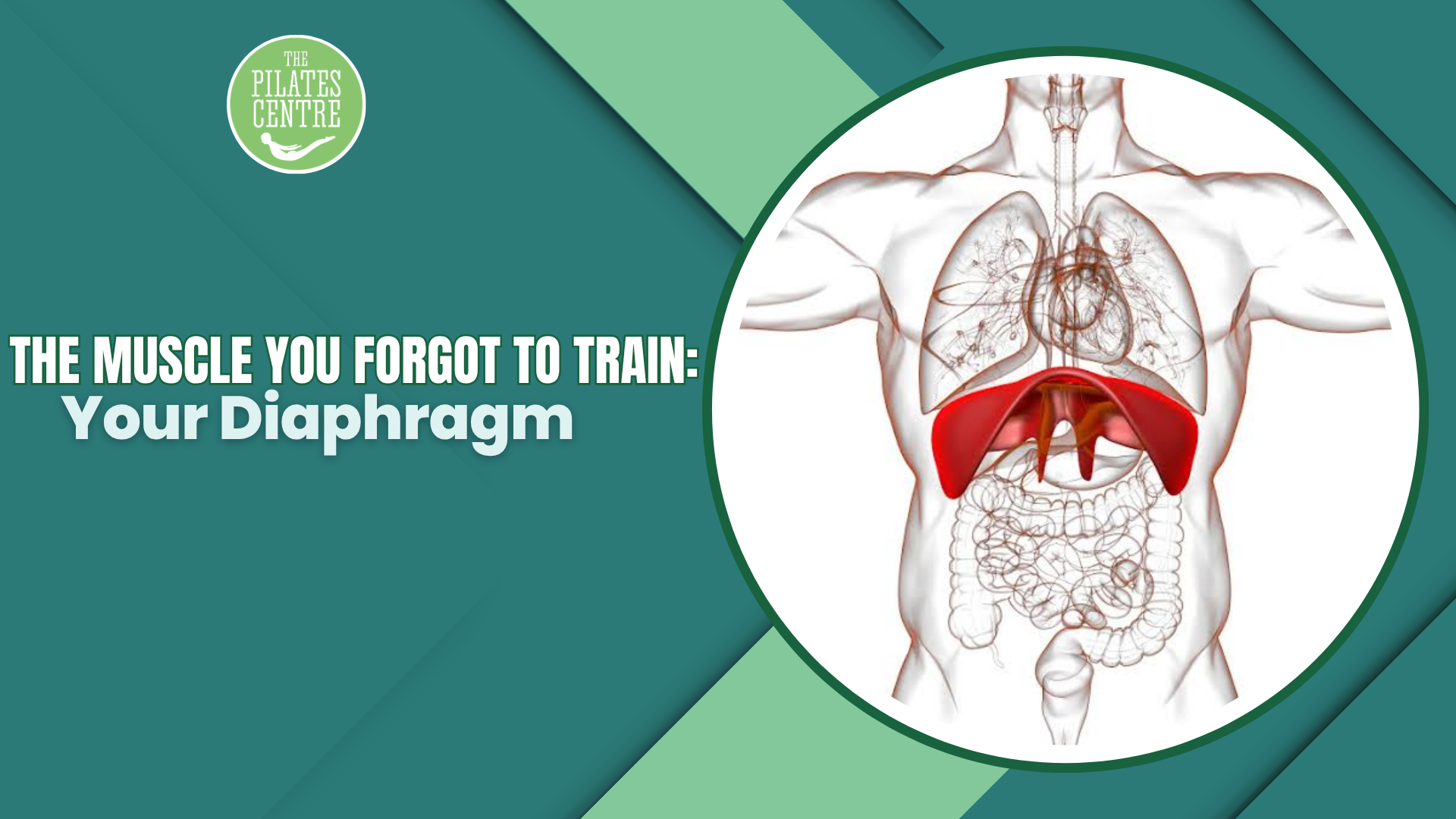
Your diaphragm.
You use it every time you breathe, but its role goes beyond simply moving air in and out of your lungs. The diaphragm works closely with your abdominal muscles, pelvic floor and deep spinal muscles, making it an important part of how your body manages pressure, stability and movement.
What Is the Diaphragm?
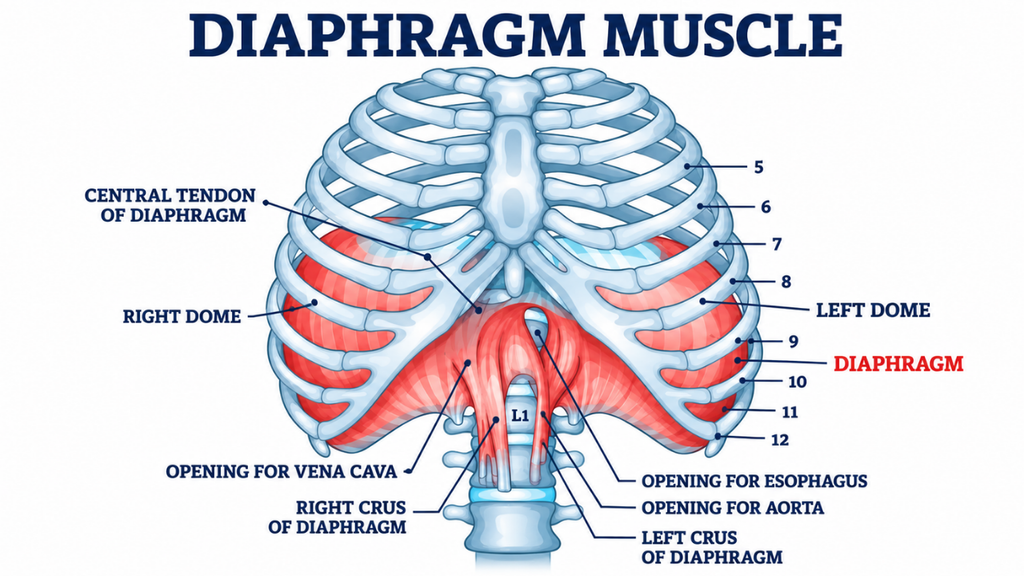
The diaphragm is a large, dome-shaped muscle located underneath the lungs, separating the chest from the abdominal cavity.
When you inhale, the diaphragm contracts and moves downward, creating more space for the lungs to expand.
When you exhale, it relaxes and moves upward again.
This happens thousands of times every day, usually without you giving it a second thought.
But breathing isn’t separate from movement. The way the diaphragm moves can influence what is happening through the ribcage, abdominal wall, spine and pelvis.
Your Diaphragm Is Part of Your Core
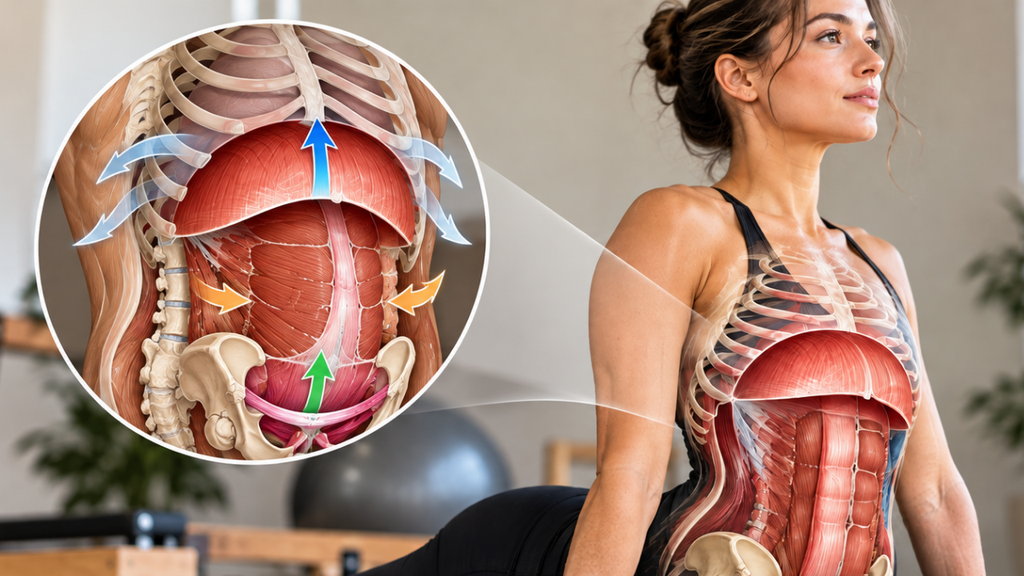
When people hear the word core, they often immediately think of the abdominal muscles.
Your core is much more than that.
This is why breathing plays such an important role in Pilates.
Pilates often encourages lateral breathing, where the breath expands into the sides and back of the ribcage rather than focusing only on the front of the chest or abdomen. As you inhale, the ribs expand; as you exhale, they naturally move back inward.
Practicing this breathing pattern can improve awareness of how the ribcage, diaphragm and trunk work together. It also allows breathing to become part of the movement itself, helping you coordinate your breath with control, stability and purposeful movement.
In Pilates, we don’t simply breathe because we need oxygen. We learn to use the breath as part of how we organise and support movement.
What Happens When We Don’t Breathe Well?
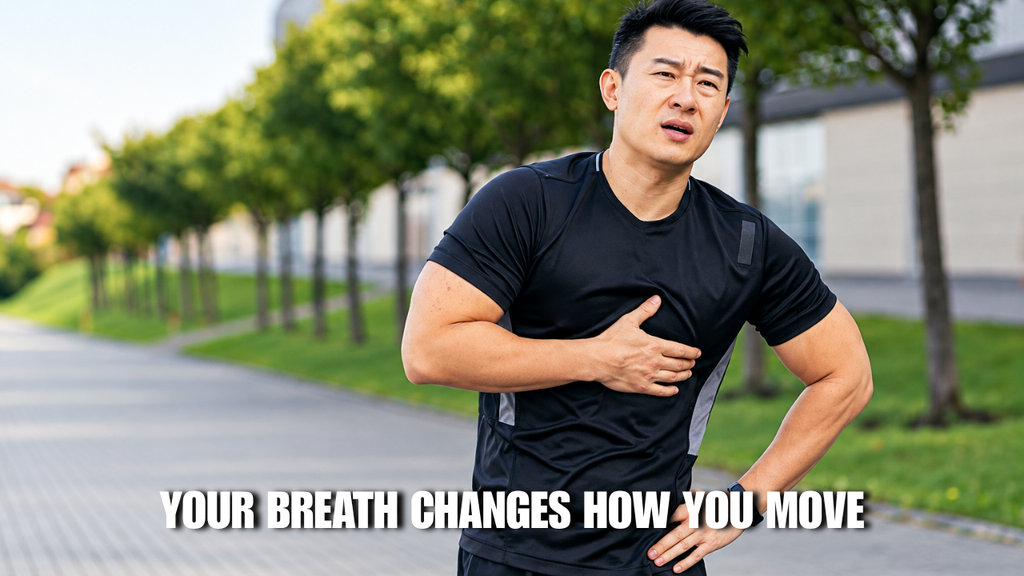
Busy days, stress, long periods of sitting and even concentrating hard on an exercise can change the way we breathe.
You might notice yourself holding your breath or taking short, shallow breaths into the upper chest.
During exercise, people sometimes become so focused on performing the movement correctly that breathing becomes an afterthought.
But constantly holding your breath or creating unnecessary tension can make movement feel harder than it needs to be.
Learning to notice your breathing is therefore an important part of developing better body awareness.
How Does Pilates Work With the Diaphragm?
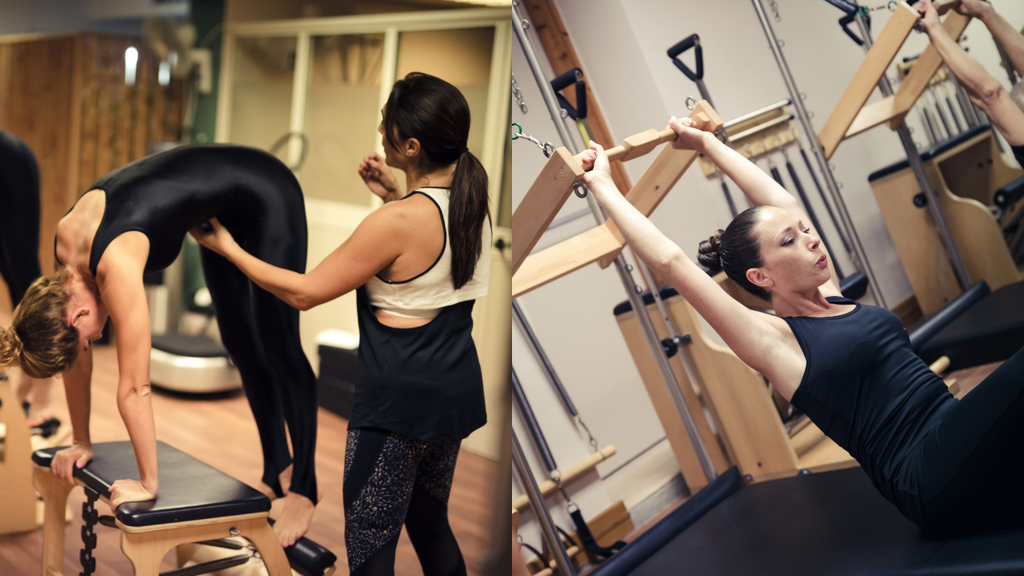
Pilates encourages you to coordinate your breath with movement, often using lateral breathing to encourage expansion through the sides and back of the ribcage. As you inhale, the ribs expand outward and into the back; as you exhale, they naturally move inward again. This helps you become more aware of how your ribcage, abdomen and trunk respond with each breath.
Practising lateral breathing can also help you notice areas where you may be holding unnecessary tension. With practice, the breath can begin to flow more naturally alongside movement rather than feeling like something separate that you have to consciously control.
The diaphragm works in coordination with the pelvic floor, abdominal muscles and muscles around the spine as pressure and movement are managed through the trunk. Pilates gives you an opportunity to explore this relationship without simply tightening the abdominals or creating unnecessary tension.
By learning when to engage, when to release and how to breathe while moving, you can develop a more balanced sense of support, control and ease throughout your Pilates practice.
At Pilates Centre, we look beyond simply completing an exercise. We help you develop a better understanding of how your body moves, breathes and works together.
Through thoughtful, personalised Pilates teaching, you can build strength, improve mobility and develop greater body awareness at a pace that works for you.
Ready to become more connected to your movement?
Get in touch with Pilates Centre to book your session.
+34 610 30 60 05
info@pilatescentre.es
Jalón, Alicante, Spain

John McCallum
is an esteemed, Fully Certified Comprehensive Classical Pilates Teacher and takes immense pride as the proprietor of the distinguished Pilates Centre located in Jalon, Spain. His remarkable journey in the realm of Pilates commenced back in 2006, a pivotal juncture when he confronted the diagnosis of three slipped discs in his lower back. Pilates emerged as a beacon of profound hope and rejuvenation in his life. Instead of succumbing to the prospect of surgical intervention, Pilates gracefully assumed the role of his lifeline.
This transformative experience impelled him to make a resolute decision that would reshape his life’s trajectory. Following his journey to become a Pilates Teacher, he passionately extended the benefits he had personally garnered to those in need. This also took him to travel to other countries to continue to learn and have a fuller understanding of the method.
Fueled by an unwavering passion for Pilates, he has forged a dynamic collaboration with a reputable research institution. This strategic alliance enables him to deliver precise and illuminating insights, fostering support and empowerment for individuals interested in the power of this method. His literary contributions have garnered distinction within an array of esteeme.